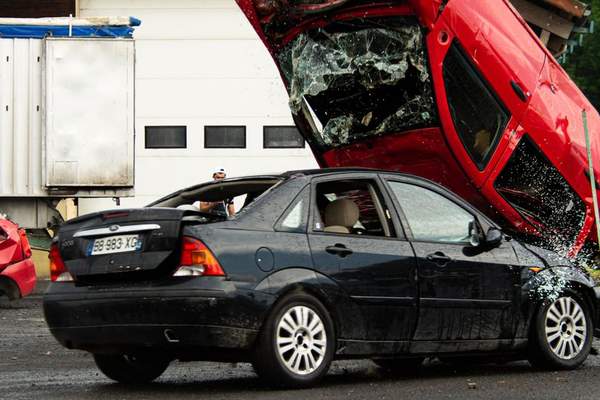
Your car has aged, its resale value has dropped, yet the collision portion of your insurance bill keeps arriving. Are you paying too much to protect a vehicle that would not generate a large claim payment?
The best time to drop collision coverage is when its annual cost is difficult to justify against the car’s current value and deductible, provided you can afford to repair or replace the vehicle yourself. Its age is a clue, not the deciding factor.
Understand the Payout You Are Protecting
Collision insurance generally helps pay for damage to your vehicle after a covered crash with another car or object, even when you’re at fault, subject to policy terms and a deductible. It does not replace liability insurance, which addresses covered damage you cause to other people.
If your vehicle is totaled, the collision settlement is generally based on its actual cash value immediately before the accident, minus your deductible. You do not receive its original purchase price or the cost of a new replacement.
Imagine your car is worth $3,200 and has a $1,000 collision deductible. A covered total loss could pay roughly $2,200, subject to claim adjustments. That payout ceiling makes the car value vs premium cost comparison essential.
Try the 10% Rule, Then Look Beyond It
The Insurance Information Institute recommends considering whether collision and comprehensive coverage remain cost-effective when a car is worth less than ten times the relevant annual premium. For collision alone, compare its own annual premium with the vehicle’s value. If collision costs 10% or more of that value each year, reconsider it.
Suppose an older sedan is worth $4,000 and its collision premium is $480 annually. The premium represents 12% of its value. That is a reason to review the policy, not an automatic command to cancel: insurance covers uncertain losses, and your finances matter.
Don’t use the entire auto insurance bill. It may include liability, comprehensive, and other charges. Ask your insurer for the collision-specific cost and the actual savings if you remove it.
Why Your Deductible Changes the Equation
Say another vehicle is worth $2,500, with a $1,000 collision deductible. A covered total loss might pay about $1,500. Spending $350 annually on a benefit capped near that amount may be difficult to justify if you have replacement savings. A higher deductible also makes coverage less useful for smaller repairs.
There is no guaranteed break-even point because nobody knows when a crash will occur. Treat these figures as a risk-management tool, not a prediction.
Two Older Cars, Two Sensible Decisions
Consider two drivers with paid-off cars worth $4,500 each. Both have $750 collision deductibles and pay $420 annually for collision. After a covered total loss, each might receive approximately $3,750.
The first driver has $9,000 in accessible savings, can use public transport, and could replace the car without borrowing. Dropping collision and saving $420 each year could be reasonable.
The second driver has $600 in savings, needs the car for night shifts, and has no backup transportation. Losing the car could mean losing income. Keeping collision while building savings could prevent a bigger financial problem.
Two households with identical cars and premiums may need different levels of protection.
Questions to Answer Before Cancelling
Do You Still Have a Car Loan or Lease?
Collision is generally not required by state law, but lenders and leasing companies commonly require collision and comprehensive insurance. Dropping required protection could breach your contract and trigger costly lender-placed coverage. Check the agreement first.
What Is the Car Actually Worth Today?
Use multiple vehicle valuation sources and account for trim, mileage, condition, and local market prices. An older pickup or sought-after model may be worth more than you assume. Update your estimate at each renewal.
How Much Will Cancelling Really Save?
Request two otherwise identical quotes, one with collision and one without. Discounts and pricing rules can affect the difference. Saving $100 a year presents a different choice from saving $600.
Could You Handle a Sudden Loss?
Picture an at-fault accident that leaves the car undrivable tomorrow. Can your emergency fund cover another vehicle, registration, and temporary transport without expensive debt? If not, keep collision while building savings.
You Can Drop Collision Without Dropping Everything
Collision and comprehensive cover different problems. Comprehensive generally covers specified non-collision events such as theft, hail, fire, or falling objects. One coverage may remain worthwhile even if the other does not, depending on its premium, deductible, and your risks.
Ask about dropping collision while keeping comprehensive if your insurer permits it and no lender requirement prevents the change. For more background, see our explanations of collision vs comprehensive insurance and how car insurance deductibles work.
Removing collision does not mean liability will repair your own car after an at-fault crash. If another driver is responsible, their liability insurer may cover your damage, but fault disputes, coverage limits, or delays can complicate recovery. Uninsured motorist property damage rules vary by state; don’t assume that coverage replaces collision.
The National Association of Insurance Commissioners notes that collision is optional under insurance laws but may be required by a lender. Retain appropriate liability and other required protections. Our guide to choosing liability insurance limits covers that separate decision.
Put the Savings Where They’ll Help
If you drop collision coverage, transfer the premium difference to a dedicated repair-and-replacement fund. Saving $35 per month produces $420 in a year and $1,260 in three years, before interest. That may not replace your car, but it can cushion the next repair or down payment.
Revisit the decision if your savings shrink, your commute changes, or the vehicle’s value shifts. Confirm the effective date with your insurer; requesting a quote does not change your coverage.
Frequently Asked Questions
At what age should I drop collision coverage?
There is no fixed age. A twelve-year-old car with strong resale value may justify collision, while a newer, low-value vehicle might not. Compare value, deductible, premium, and savings.
Should I keep collision on a car worth $3,000?
It depends on its premium, deductible, financing requirements, and whether you can afford to replace it. If the deductible leaves a small potential payout, dropping coverage may make sense.
Does dropping collision lower my insurance bill?
Usually, yes, because you’re removing paid protection. Ask for a revised quote to see the precise annual difference rather than assuming a particular percentage.
Can I keep comprehensive but cancel collision?
Often, yes, on a vehicle you own outright, subject to insurer rules. A finance or lease agreement may require both coverages, so verify your obligations first.
The Bottom Line
Knowing when to drop collision coverage requires two judgments: whether the potential payout still justifies the premium, and whether you could handle having no collision payment after a crash. If the protection is costly and you have enough reserves, cancelling may free up money for your next vehicle. If losing this car would disrupt your livelihood, keeping coverage longer can be sensible.